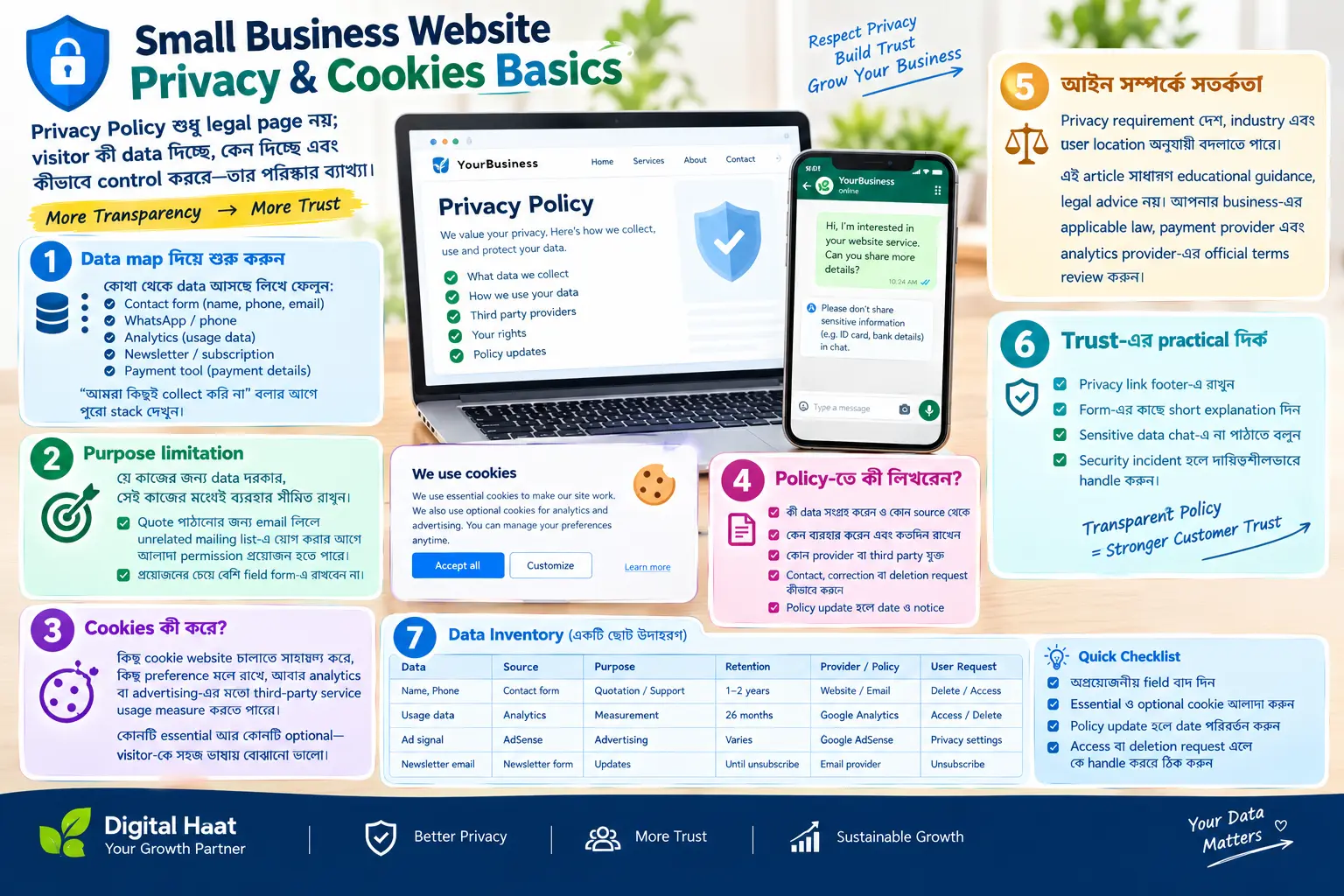
Map the data you collect
List form fields, account details, analytics events, advertising cookies, payment data and support conversations. Collect only what your service genuinely needs and document where it goes.
Explain purpose and retention
Tell visitors why data is collected, how long it is kept, who processes it and how they can contact you. Use plain language and keep the policy consistent with your actual tools and workflow.
Understand cookies and consent
Some cookies are needed for core functions while others measure usage or support advertising. Check the rules that apply to your audience and provide a lawful, clear choice where consent is required. Do not treat silence as an informed choice when the law requires opt-in.
Protect contact and order data
Use HTTPS, limit access, secure accounts, update software and avoid sending unnecessary sensitive information through chat or email. Have a simple process for handling access, correction or deletion requests where applicable.
Review third-party tools
Analytics, advertising, forms, payment providers and embedded media may process data under their own terms. Keep an inventory, link to relevant policies and remove tools you no longer need.
Trust checklist
- Current privacy and cookie information
- Clear explanation of forms, analytics and advertising
- Minimal data collection and sensible retention
- HTTPS, access control and secure vendor settings
- A visible contact route for privacy questions